
THE 5 ESSENTIAL SCALES OF MUSIC ONE MUST KNOW
Whether you are improvising a jazz solo, writing a pop melody, or practicing classical technique, certain scales form the foundational "alphabet" of music. Master these, and you can navigate almost any musical situation on any instrument.
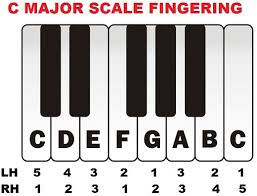
1. The Major Scale (The Foundation)
The Major Scale is the cornerstone of Western music. Almost every other scale or chord is defined by how it differs from this one. It has a bright, stable, and "happy" character.
Structure: Whole - Whole - Half - Whole - Whole - Whole - Half
Why it's essential: It is the basis for key signatures and the "Do-Re-Mi" system (Solfège).
2. The Natural Minor Scale (Aeolian Mode)
If the Major scale is the "sun," the Natural Minor is the "moon." It is the most common minor scale and provides a serious, melancholic, or moody atmosphere.
Structure: Whole - Half - Whole - Whole - Half - Whole - Whole
Why it's essential: Understanding the relationship between a Major scale and its "Relative Minor" (e.g., C Major and A Minor) is crucial for understanding song structures.

3. The Pentatonic Scales (Major and Minor)
"Penta" means five, and these scales consist of only five notes. They are arguably the most widely used scales in the world, appearing in everything from ancient folk music to modern rock and blues.
Major Pentatonic: 1 - 2 - 3 - 5 - 6 (Leaves out the 4th and 7th)
Minor Pentatonic: 1 - b3 - 4 - 5 - b7
Why it's essential: They are "safe" scales—because they lack dissonant half-steps, almost any note you play within the scale will sound good over the corresponding chord.


4. The Blues Scale
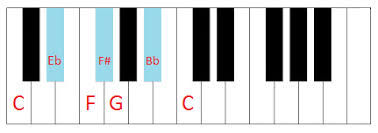
By adding a single "blue note" (the tritone or b5) to the Minor Pentatonic scale, you get the Blues Scale. This note provides the grit and soul essential for blues, jazz, rock, and soul.
Structure: 1 - b3 - 4 - b5 - 5 - b7
Why it's essential: It teaches you how to use dissonance and tension to create emotional "pull" in a melody.
5. The Chromatic Scale
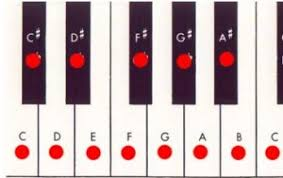
The Chromatic Scale includes every single note available in Western music (all 12 pitches).
Structure: All Half-steps.
Why it's essential: While rarely used to build a whole melody, it is vital for developing finger dexterity and understanding how to use "passing tones" to connect ideas smoothly.
Summary Table
Scale | Character | Best For |
Major | Bright, Heroic | Pop, Classical, Anthems |
Natural Minor | Sad, Dramatic | Ballads, Metal, Cinematic |
Pentatonic | Universal, Simple | Folk, Rock, Improvisation |
Blues | Gritty, Soulful | Blues, Jazz, Funk |
Chromatic | Fluid, Technical | Transitions, Finger Exercises |
Whether you are looking to master the technical precision of the violin or piano, the rhythmic versatility of the guitar, or the creative depth of music theory, your journey starts with a single note. At Maestro School of Music, we don’t just teach you how to play; we teach you how to understand, create, and lead.
Don't let your musical potential remain untapped. Join our community of dedicated learners and expert instructors in Goa to transform your passion into mastery.
Ready to tap into your musical skill? Reach out to us today to inquire about our curriculum, faculty, and enrollment dates.
Visit us: https://www.maestromusicschool.com/
Location: Goa, India (Online classes available globally)
Connect: +919823361463
Maestro School of Music: Let the artist in you shine!
Comments